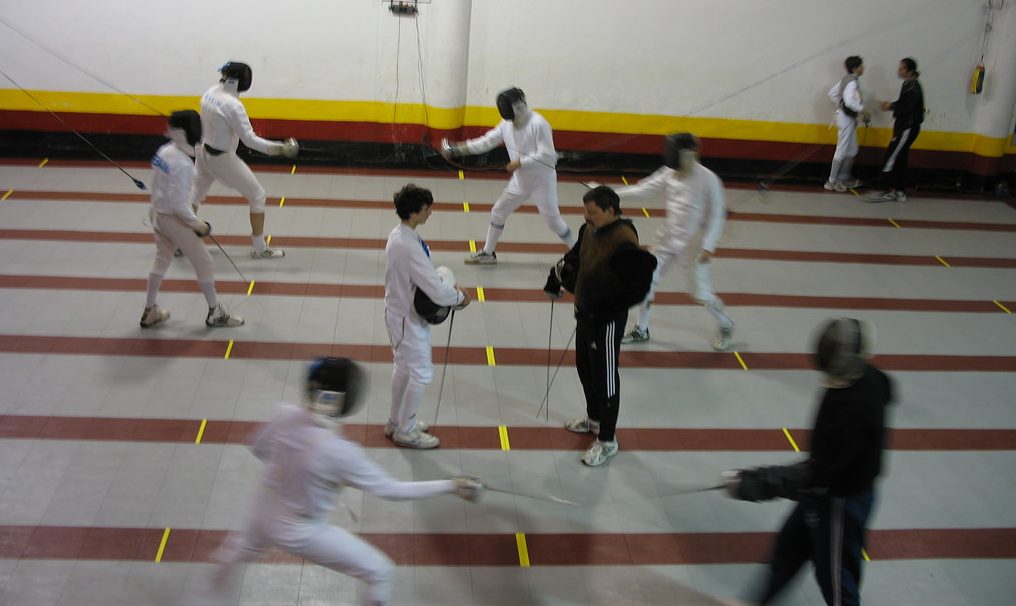
This foil lesson is a must see. This video is provided by Rolando Balboa and was taken at the foil coaching clinic in April. Gia Kvaratshelia is the Varisty Foil Coach at the University of Notre Dame. This is a 10 minute warm-up portion of a two hour presentation he made for advanced foil coaches on modern foil techniques and training methods.
The lesson starts out with a warm-up that focuses on hitting with extension from every angle within extension distance. The warm-up develops creativity in the fencer since the "problem" being solved is how to hit within the confined space with the current lockout timing.
During the past few years we've interviewed many of the top US and world fencers about how they approach the sport of fencing and what training techniques and strategies they use to succeed.
Every world class fencer has indicated the importance of a solid mental approach to fencing. Whether for performance in preliminary rounds or for the Olympic finals, a mastery of the mental game is a key component of the fencers' success.
Fencing is an extremely complex sport that takes years of repetitive, muscle-memory building exercises to create a natural flow-like state. Learning a new skill usually requires dedication despite a fair amount of failure, especially when applying and mastering that skill in competitive bouting. This idea of a slowly-but-surely improvement over long periods of time is evident to most fencers, yet it is often forgotten when planning a training routine. Actually, the concept of a long-term training routine is alien to many fencers.
Developing consistency in your competitive results starts with how you prepare for a tournament. The establishing an individualized routine is essential for every fencer’s training program. It creates a foundation which sets the tone for the rest of the day. How you feel going into a competition -both in your mind and body- should be planned out and rehearsed as if you have done it a million times before. That way, when it comes to competition day, you won’t feel as if it is a new and stressful experience.
Before the tournament begins, you check out the seeding table not just to see where you are seeded, but where everyone else is seeded too. Then you check it after the round of pools. Then you check it after your DEs. And then again at the end of tournament. And then again on Ask Fred.