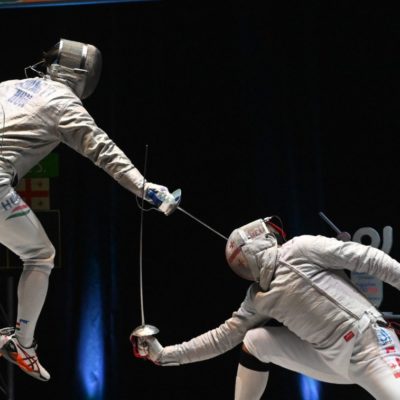
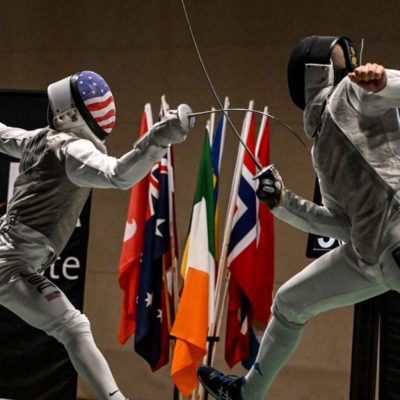
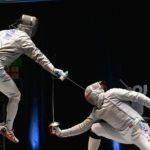
Flicks are whip-like attacks that can score against very oblique and even concealed targets. Sometimes thought of as a recent corruption, flicks actually have a long history that stems from coupe' (the cut-over) and epeeists efforts to throw their points around the bell. Properly executed and judged, they are effective and beautiful attacks; poorly executed and judged, they can be painful and annoying.
One common criticism of the flick is that it would cause minor injury with a real weapon. The obvious, if flippant, response to this is not to flick when fencing with a real weapon.
Another common criticism is that flicks are difficult to defend against. One must simply remember to parry them as if they were cuts, not thrusts (using auxiliary parries like tierce, quinte, and elevated sixte). The flick is also highly sensitive to distance, and a well-timed break in the measure will cause it to land flat.
A third criticism is that flicks are usually given the priority, even though the attack often begins with the point aimed at the ceiling. However, the definition of an attack (see question 1.15) says nothing about where the point is aimed, only what it is threatening. It is normally true that an attack that scores must have threatened in at least its final tempo.
Sabre fencing has suffered from a related and more serious scourge, the whip-over. In this case, the foible bends around the opponent's blade or guard following a parry, to contact the target and register a touch. The scoring machines attempt to reduce these false touches by blocking hits within a certain time window following weapon contact, but this is of limited effectiveness and also has the unfortunate effect of blocking the occasional attack through the blade. Referees have tried to help out by analyzing whip-over touches as remises, but they still score over composed or delayed ripostes. The FIE has been considering and trying various possible fixes, including varying the timeouts and mandating stiffer sabre blades.
Right-of-way is the set of rules used to determine who is awarded the point when there is a double touch in foil or sabre (ie. both fencers hit each other in the same fencing time). It is detailed in the FIE Rules of Competition, Articles 232-237 (foil) and 416-423 (sabre).
The core assumption behind right-of-way is that a fencing bout is always in one of three states:
nothing significant is happening
the fencers are conceiving and executing their actions simultaneously
one fencer is controlling the action and tempo and the other is trying to gain control.
Since no points will be scored in the first situation, we can ignore it. In the second situation, the fencers' actions have equal significance, and it is impossible to award a touch. Both touches will be annulled and the bout will be resumed where it was stopped.
The third situation is the tricky one. The controlling fencer has the right-of-way, and his hit has precedence over any hit from the other fencer. The job of the referee is to decide which fencer was NOT controlling the action, and annul his touch. If he cannot decide, the referee should abstain, annul BOTH hits, and resume the action where it left off.
Control (and right-of-way) is taken whenever one fencer threatens the other with his blade. A threat can be either an attack (see question 1.15), or a "point in line" (see question 1.17) that is established before the opponent attacks.
Control (and right-of-way) is lost when the threat misses, falls short, is broken off, or is deflected away from the target by a parry or other engagement from the defender. The defender has a split-second window of opportunity to return the attack (ie. riposte) before the attacker recovers; if he does so, he takes over right-of-way and the tables have turned. Otherwise it is a toss-up; the first fencer to initiate an attack will sieze the right-of-way anew.
The right-of-way relationships between common fencing actions are as follows:
derobement has right-of-way over attacks on the blade
attacks on the blade have right-of-way over the point in line
point in line has right-of-way over the attack
the simple attack has right-of-way over the stop-hit
the stop-hit has right-of-way over the renewal of the attack
the stop-hit in time has right-of-way over the compound attack
the riposte has right-of-way over the renewal of the attack
the counter-riposte has right-of-way over the renewal of the riposte
the remise of the attack has right-of-way over the delayed riposte
It is very easy to acquire bad habits and poor technique if you do not have the guidance of a knowledgable fencing master, coach, or fellow fencer. If you are serious about improving your fencing, quality coaching is always your best investment. However, a disciplined fencer still has options if decent instruction is not available on a regular basis.
Firstly, a solid knowledge of fencing theory and regulations is a must. The freelance fencer should study the FIE Rules of Competition and a good fencing manual (see Section 3.3). The fencer should test and apply this knowledge by presiding whenever possible. An appreciation of good fencing style is also essential, so that the fencer can readily identify weaknesses in his own and other fencers' techniques. Observation and comparison of skilled or accomplished fencers will develop this ability. Training videotapes and videotapes of high-level competitions (see Section 3.6) are also helpful in this regard.
The freelance fencer must be open-minded and critical of his own technique, so that he can recognize problems before they develop into habits. Discussion of his weaknesses with training opponents will help him clarify the areas that need work. If possible, he should videotape his bouts and review them to spot defects in his tactics and technique.
The fencer should seek out opponents who will strenuously test his weaknesses. More experienced fencers, left-handers, those whose tactics are particularly effective, and even those with annoying (ie. difficult) styles should be courted on the practice strip. When fencing less skilled opponents, the fencer should restrict his tactics to a small set that require practice, and resist the temptation to open up if he should start losing.
The opportunity to participate in footwork and line drills should never be passed up. When he can find an agreeable partner, the fencer can do more personalized drills to exercise his weak areas. (Of course it is courteous to indulge the needs of one's partner when he in turn works on his own training.)
Lastly, the fencer should remain aware of his bout psychology and mental state when fencing, and try to cultivate the mindset that in his experience produces good fencing.
Beginner's dry fencing setup: about $100 - $200 US Includes: cotton jacket, glove, dry weapon, mask
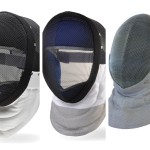
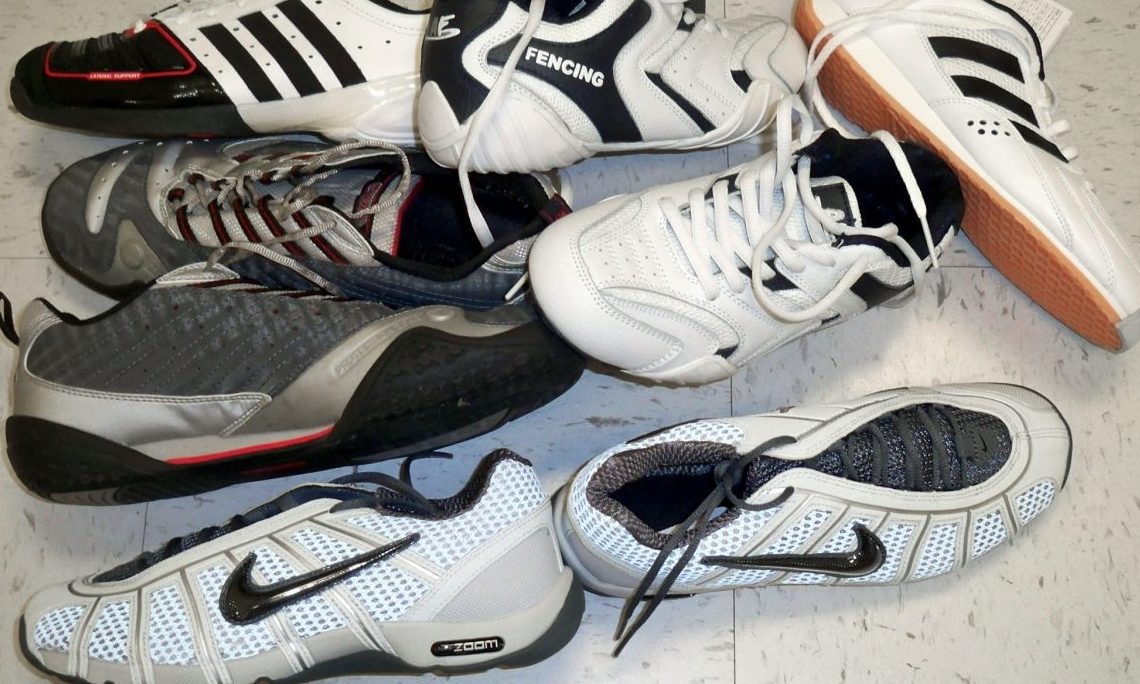
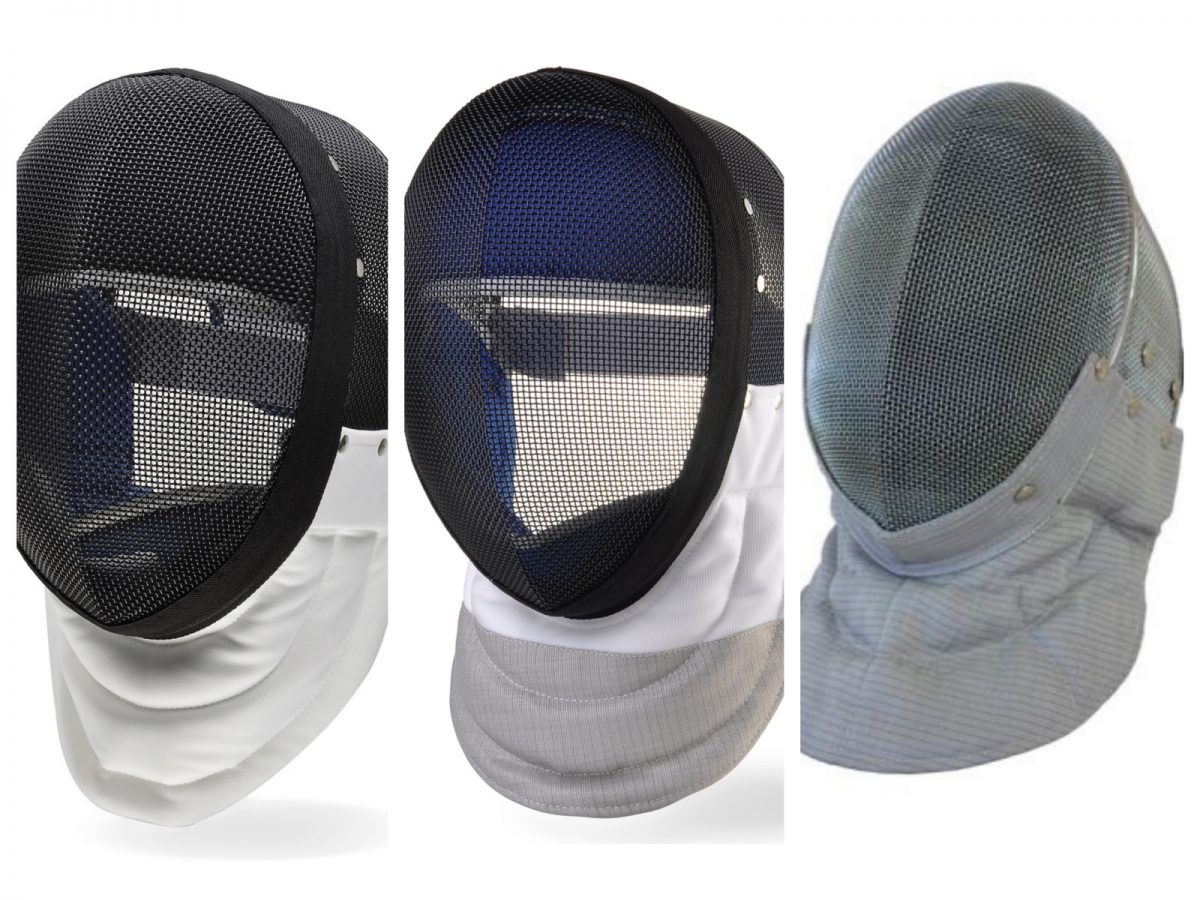
FIE Competition setup: about $500 - $1000 US Includes: FIE 800N jacket & britches, FIE 1600N mask, at least 2 electric weapons, body cord, socks, glove, shoes, lame (foil & sabre only), sensor (sabre only). Note: while FIE-certified equipment is recommended both in terms of safety and quality, clothing costs can be as much as halved by purchasing regular cotton or synthetic knits. Do not expect such equipment to be accepted at national or international levels of competition, however. Always wear a plastron when using non-homologated fencing jackets.
Club costs vary, but are usually on the order of $50-$100 per year for each day per week of fencing. Many clubs will provide or rent equipment to beginners.